Introduction
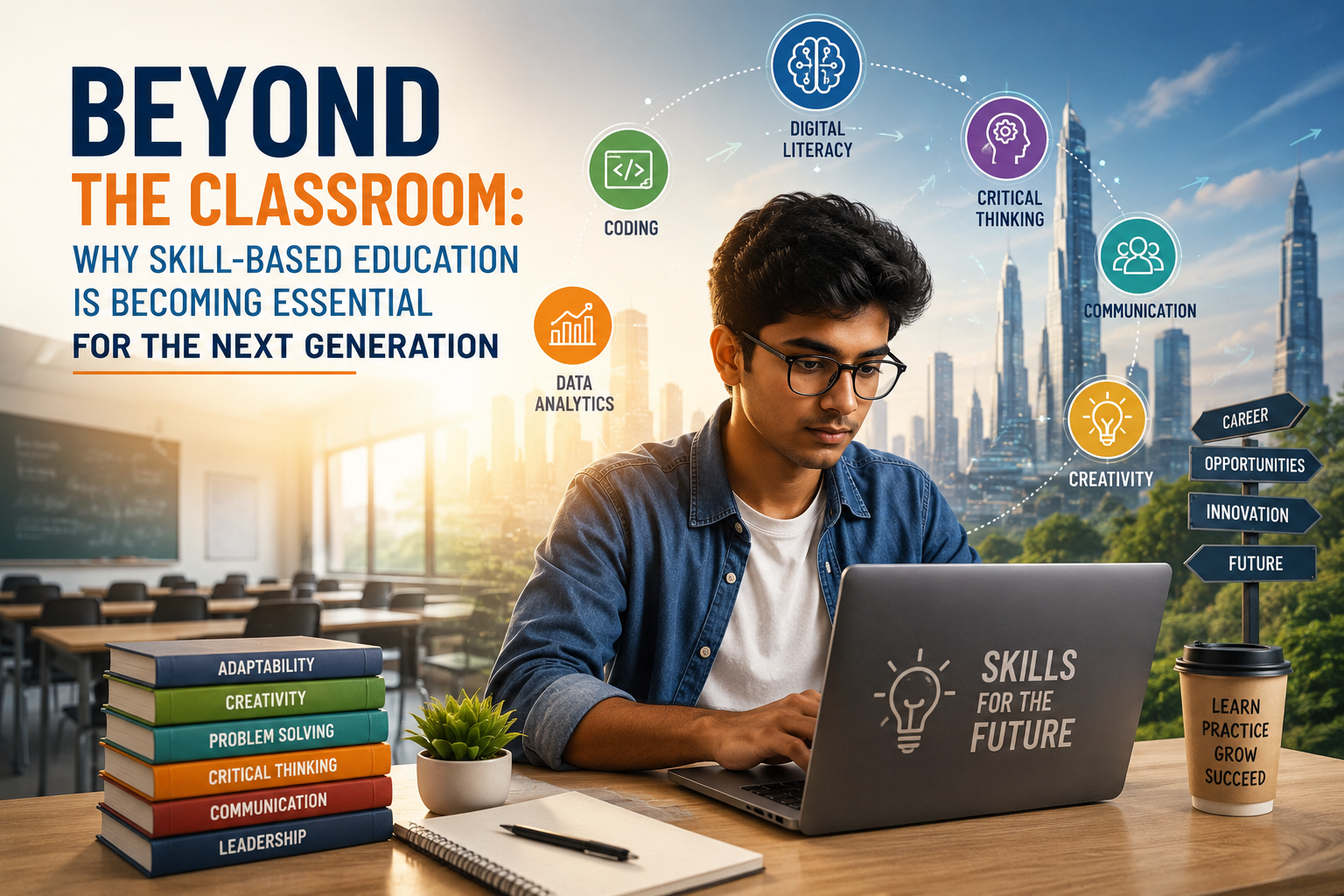
Education has traditionally focused on academic knowledge, examinations and formal qualifications. While these elements remain important, the demands of the modern economy are encouraging a broader approach to learning. Students are increasingly expected to demonstrate practical abilities, communication skills, creativity, problem-solving capabilities and technological awareness alongside academic achievement.
This shift has strengthened the importance of skill-based education. Instead of viewing education only as preparation for examinations, skill-based learning aims to prepare students for real-world challenges and professional environments.
As industries continue to evolve, developing practical capabilities at an early stage can help young people become more confident, adaptable and prepared for future opportunities.
Understanding Skill-Based Education
Skill-based education focuses on applying knowledge rather than simply memorising information. Students may learn through projects, practical exercises, workshops, simulations, internships and collaborative assignments.
For example, a student studying business may benefit from creating a business plan, conducting market research or developing a basic marketing strategy. A student interested in technology can gain valuable experience by working on coding projects rather than relying exclusively on theoretical lessons.
This approach allows students to understand how classroom concepts connect to real situations.
The Changing Employment Landscape
The workplace is changing rapidly because of automation, digitalisation and evolving consumer expectations. Some traditional job roles are changing, while new professions are emerging across areas such as artificial intelligence, cybersecurity, data analytics, digital marketing, renewable energy and advanced manufacturing.
Students entering this environment need more than certificates. They need the ability to learn new tools, communicate ideas and solve unfamiliar problems.
Skill-based education can help develop these capabilities by exposing learners to practical challenges before they enter the workforce.
Communication and Soft Skills Matter
Technical knowledge is only one part of professional success. Communication, teamwork, leadership, time management and emotional intelligence are increasingly valuable across industries.
Students can develop these skills through presentations, group projects, debates and extracurricular activities. Such experiences encourage them to express ideas clearly, listen to others and work towards shared objectives.
Soft skills are particularly important because most professional environments require collaboration. Even highly specialised employees often need to communicate with colleagues, clients or stakeholders from different backgrounds.
Entrepreneurship Through Education
Skill-based learning can also encourage entrepreneurship. Students who learn how to identify problems, research markets, develop solutions and present ideas may become more comfortable exploring entrepreneurial opportunities.
Entrepreneurship education does not necessarily mean that every student must start a company. Instead, it can develop initiative, creativity and an understanding of how businesses operate.
These qualities can be useful even for students who eventually choose conventional employment.
Technology and Digital Skills
Digital literacy is becoming increasingly important across professions. Students may need to understand productivity software, online collaboration, digital communication and basic data handling regardless of their chosen career.
For students pursuing technology-related fields, deeper skills such as programming, data analysis, cloud computing and artificial intelligence can provide additional opportunities.
Educational institutions therefore have an important role in ensuring that students are not simply consumers of technology but also understand how digital tools work and how they can be applied responsibly.
The Role of Industry Exposure
One of the strongest ways to make education practical is to connect students with industry. Guest lectures, internships, apprenticeships, company visits and real-world projects can provide insights that textbooks cannot always offer.
Industry exposure also helps students understand workplace expectations. They can learn how teams operate, how deadlines are managed and how theoretical knowledge is applied to business problems.
Educational institutions can benefit as well because industry partnerships can help them understand emerging skill requirements.
Rethinking Success in Education
Skill-based education also encourages a broader definition of academic success. A student may not always demonstrate potential through traditional examinations alone.
Practical projects, creativity, problem-solving and teamwork can reveal abilities that standard assessments may overlook.
This does not mean academic knowledge should become less important. Instead, knowledge and skills should complement each other. Students need a strong conceptual foundation as well as opportunities to apply what they learn.
Making Skill-Based Learning Accessible
For skill-based education to become widespread, institutions need appropriate infrastructure, trained educators and industry partnerships. Schools and colleges must also ensure that practical learning is accessible to students from different socioeconomic backgrounds.
Online resources and affordable digital tools can help expand access, but technology should not become a substitute for meaningful teaching and mentorship.
Conclusion
Skill-based education is becoming increasingly important because the future of work demands adaptability as much as academic knowledge. Students need opportunities to experiment, solve problems, communicate, collaborate and apply classroom learning to real situations.
The education system of the future will likely place greater emphasis on combining knowledge with practical capability. By giving students the opportunity to develop both, educational institutions can help prepare a generation that is better equipped not only to find employment but also to create value, innovate and respond confidently to change.